25. Promote Bowel Regularity
Fiber contributes to healthy elimination.
26. Support Wound Healing
Zinc plays a central role in tissue repair and immune response.
27. Potential Protective Effects Against Certain Cancers
Research into phytochemicals suggests possible protective roles against breast, prostate, and colon cancers — though more research is needed.
28. Maintain Mental Clarity
Healthy fats and antioxidants protect neural tissue from oxidative stress.
29. Strengthen Teeth
Magnesium and phosphorus contribute to enamel and structural integrity.
30. Provide Plant-Based Iron
Pumpkin seeds are a helpful source of iron for vegetarians and vegans.
Homemade Uses of Pumpkin Seeds
Pumpkin seeds are not just nutritious — they are versatile.
1. DIY Trail Mix
Combine pumpkin seeds with:
- Almonds
- Dried cranberries
- Coconut flakes
- Dark chocolate
Balanced, portable fuel.
2. Pumpkin Seed Milk
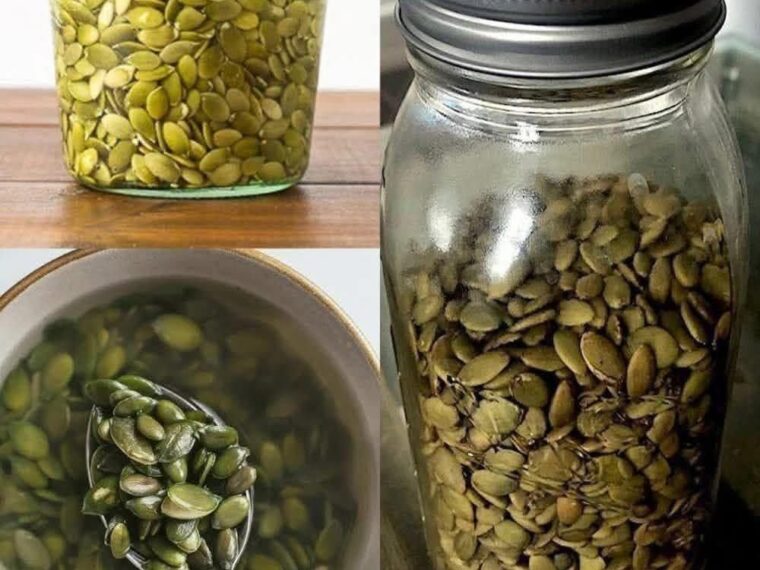
Soak 1 cup seeds overnight.
Blend with 3 cups filtered water.
Strain through cheesecloth.
A dairy-free, mineral-rich alternative.
3. Pumpkin Seed Butter
Blend roasted seeds until creamy.
Add cinnamon or sea salt.
High-protein spread for toast or fruit.
4. Face Mask
Mix pumpkin seed oil with honey and a pinch of turmeric.
Apply gently for hydration support.
5. Hair Oil Treatment
Massage cold-pressed pumpkin seed oil into scalp weekly.
Leave for 30 minutes before washing.
6. Smoothie Booster
Add 1–2 tablespoons to smoothies for extra protein and minerals.
7. Salad Crunch
Lightly roast and sprinkle over salads or soups.
8. Gut Support Snack
Pair with yogurt or fermented foods.
9. Traditional Parasite Support (Pets)
Some pet owners add ground pumpkin seeds to food — but veterinary consultation is essential first.
10. Seed Cycling for Hormonal Support
Often consumed during the first half of the menstrual cycle as part of hormone-balancing routines.
How to Eat Pumpkin Seeds for Maximum Benefit
Raw
Preserves natural enzymes and heat-sensitive nutrients.
Soaked or Sprouted
Improves digestibility and reduces phytic acid, which can inhibit mineral absorption.
Lightly Roasted
Enhances flavor while retaining nutrients if heat is kept moderate.
Oil Form
Cold-pressed pumpkin seed oil is ideal for salads — not high-heat cooking.
Precautions
Even nutrient-dense foods require balance.
- Stick to 1–2 tablespoons daily.
- They are calorie-dense.
- Store in airtight containers to prevent rancidity.
- People with seed allergies should avoid them.
Moderation is key.
The Deeper Reason They Matter
Pumpkin seeds are not a miracle.
They are concentrated nutrition in simple form.
In a world of processed snacks, they represent something elemental — food that supports the body without excess additives.
They nourish quietly.
They do not spike blood sugar dramatically.
They do not rely on artificial enhancement.
They are ancient food — simple, mineral-rich, stable.
Final Thoughts
Tiny, yes.
Insignificant, no.
Pumpkin seeds deliver meaningful nutritional value in small quantities. Whether you sprinkle them on salads, blend them into milk, grind them into butter, or enjoy them raw, they offer steady support for:
- Immunity
- Heart health
- Hormonal balance
- Skin integrity
- Brain function
- Digestive health
They are not a replacement for a balanced diet.
They are an intelligent addition to one.
Sometimes, health does not require complexity.
Sometimes it begins with something small, green, and quietly powerful — sitting in a jar on your kitchen shelf.
And once you understand their value, that jar rarely stays empty for long.